gallery 02 · the published record
The BPC-157 TB-500 research, leg by leg
Two mechanisms, two literatures, one honest gap where the combination data should be.
How the two mechanisms divide the work
BPC-157 TB-500 research splits cleanly into two non-overlapping mechanisms, which is the entire basis of the pairing. BPC-157 supplies a local cytoprotective and pro-angiogenic signal: it up-regulates and internalizes VEGFR2 with downstream Akt and eNOS activation, modulates the nitric-oxide system, and drives fibroblast and tendocyte proliferation through growth-hormone-receptor sensitization and FAK-paxillin signaling [2]. TB-500, by way of its parent protein Thymosin Beta-4, supplies an intracellular actin-sequestration signal: the LKKTETQ motif binds monomeric G-actin and regulates the cytoskeletal dynamics underlying cell migration, re-epithelialization, and progenitor mobilization [3][4].
The two are described as complementary but largely separate routes — angiogenesis and cytoprotection on one side, cytoskeletal migration on the other. That complementarity is the rationale. It is not, by itself, evidence that the two work better together.
How does BPC-157 work compared to TB-500?
BPC-157 acts through a local cytoprotective and pro-angiogenic route — VEGFR2-Akt-eNOS up-regulation [2]. TB-500 acts through intracellular actin sequestration governing cell migration [3]. The two are described as complementary but largely non-overlapping: one builds vasculature and protects tissue locally, the other regulates the cytoskeleton that lets cells migrate into a wound. Different targets, different compartments.
How does TB-500 work (actin / Thymosin Beta-4)?
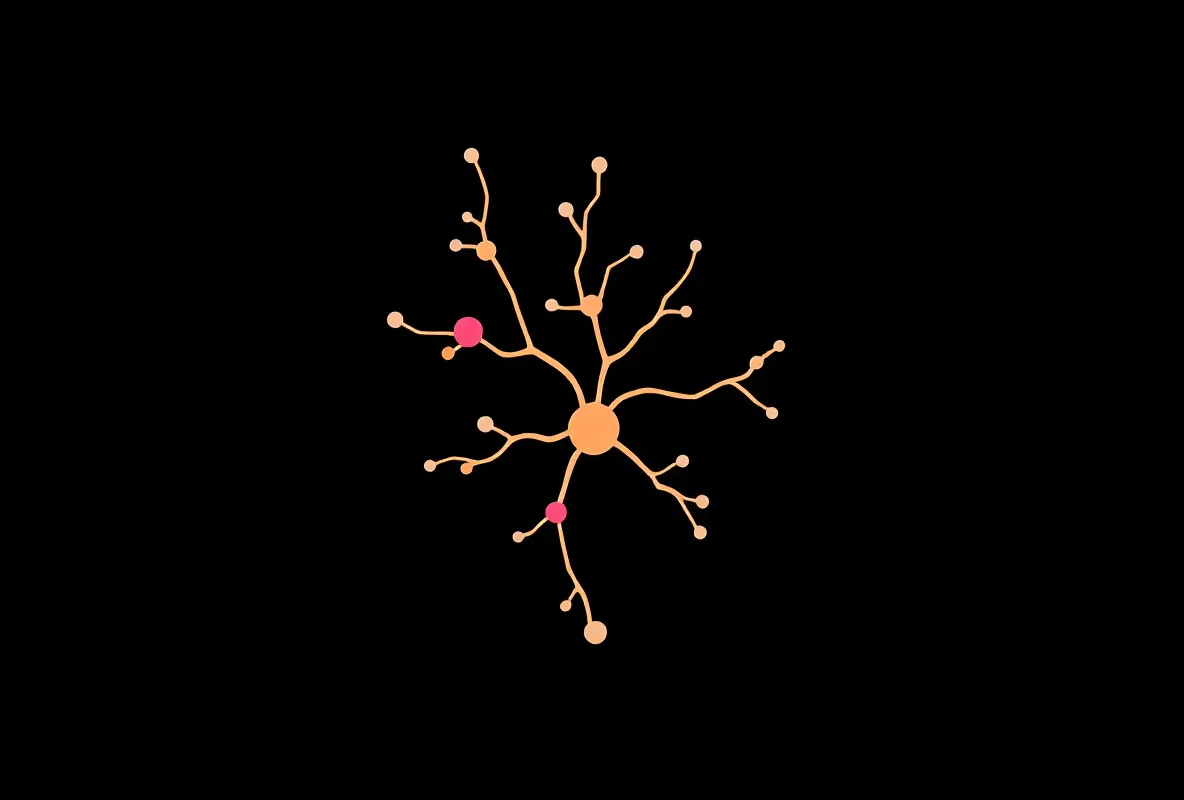
TB-500's LKKTETQ motif binds monomeric G-actin one-to-one. X-ray crystallography of a Thymosin Beta-4-actin complex at 2 Angstrom resolution showed the peptide sequesters the actin monomer by capping both ends, preventing it from polymerizing [3]. That buffering of the free-actin pool is the structural basis for the cytoskeletal-migration leg of the blend, and it is one of the better-resolved facts in the entire record.
Does the BPC-157 TB-500 blend help tendon and ligament injuries?
In animal models, BPC-157 accelerated healing of a transected rat Achilles tendon across biomechanical, functional, microscopic, and macroscopic measures, and in vitro it reversed 4-hydroxynonenal-induced growth inhibition of tendocytes into stimulation [1]. These are preclinical, single-compound findings in the BPC-157 leg. The blend's effect on tendon and ligament injury in humans is unproven; no controlled human combination study exists [9].
Does BPC-157 and TB-500 help muscle tears and recovery?
Recovery interest rests on preclinical work — BPC-157 tendon and tissue studies [1] and Thymosin Beta-4 cell-migration findings [4]. No controlled human study supports muscle-recovery claims for the blend [9][10]. A 2026 narrative review of approved and unapproved peptides for musculoskeletal injury found favorable tissue-repair outcomes in animal models but scarce rigorous human safety data and potential for serious harm [10].
What the BPC-157 TB-500 blend is studied for
The BPC-157 TB-500 benefits discussed in research are tissue-repair endpoints, framed as preclinical findings rather than outcomes for people. The BPC-157 leg is studied in tendon, ligament, and wound models — the flagship being accelerated healing of a transected rat Achilles tendon [1] — and in angiogenesis models, where it increased vessel density and accelerated blood-flow recovery in ischemic muscle, effects blocked by endocytosis inhibition [2]. The TB-500 leg, by way of full-length Thymosin Beta-4, is studied for cell migration, re-epithelialization, anti-scarring (reduced myofibroblast number), and angiogenesis [4].
Three recent reviews bound these claims honestly. A 2025 systematic review of BPC-157 in orthopaedic sports medicine included 36 studies — 35 preclinical, only one human (a 12-patient retrospective) — found no clinical safety data, and graded the evidence at the lowest tiers; it makes no mention of TB-500 or any combination [9]. A 2025 narrative review concluded BPC-157 should be considered investigational given limited human data and non-regulated availability [11].
Why BPC-157 is paired with TB-500
Why is BPC-157 paired with TB-500? The pairing matches BPC-157's local cytoprotective and pro-angiogenic signal with TB-500's actin-sequestration and cell-migration signal as complementary mechanisms [2][3]. The reasoning is mechanistic: build and protect the vasculature with one leg, mobilize the cells that resurface and remodel the tissue with the other. Used together, the argument goes, they cover more of the repair cascade than either covers alone. That is the rationale — and it is exactly where the evidence stops and extrapolation begins.
Is there any study showing BPC-157 and TB-500 work better together (synergy)?
No. No peer-reviewed study defines a synergy ratio, dose, or endpoint for the two peptides given together. The 2025 systematic review of BPC-157 (36 studies, only one human) makes no mention of TB-500 or combination use [9]. "Synergy" claims are extrapolations from each peptide's independently characterized — and largely non-overlapping — mechanisms, not a finding from a controlled combination study. This is the synergy claim and the evidence gap in one line: the rationale is real, the combination data is absent.

Do BPC-157 and TB-500 promote angiogenesis (new blood vessels)?
BPC-157 is pro-angiogenic via VEGFR2 up-regulation and internalization, with downstream VEGFR2-Akt-eNOS signaling; in animal models it increased vessel density and accelerated blood-flow recovery in ischemic muscle [2]. TB-500, through Thymosin Beta-4, promotes angiogenesis via endothelial migration [4]. Both effects are reported in animal and in-vitro models, by distinct routes — one receptor-driven, one migration-driven.
Are there human clinical trials on the BPC-157 + TB-500 combination?
There are no controlled clinical trials of the combination [9]. Human data exist only for the individual constituents and are thin. BPC-157 has three small pilot studies — a two-person intravenous safety pilot, an intra-articular knee-pain case series, and a 12-patient intravesical interstitial-cystitis pilot. Human data labeled "TB-500" are in fact for full-length Thymosin Beta-4: a Phase 1 intravenous study in 40 volunteers found it well tolerated to 1260 mg with no dose-limiting toxicities [6], and a 2021 first-in-human study of recombinant Thymosin Beta-4 in 84 volunteers reported only mild-to-moderate adverse events and dose-proportional pharmacokinetics [7]. Neither tested the heptapeptide, and neither tested the blend. This is the human clinical evidence in full.
What the record does not support
Several caveats temper the recovery narrative. The TB-500 identity gap is doubled in the blend: the data leans on full-length Thymosin Beta-4 for one of its two components [4][8]. A large share of the BPC-157 foundational literature comes from a single research group, which newer reviews note as an independent-replication question [11]. And the preclinical record is not uniformly positive — in dystrophin-deficient mdx mice, chronic Thymosin Beta-4 increased regenerating fibers but did not improve strength, cardiac function, or fibrosis, and a rat embolic-stroke study found dosing non-monotonic, with the highest dose giving no benefit. "More is better" loading rationales do not survive that data.
One more sits outside the lab: Thymosin Beta-4 is implicated in tumor metastasis and angiogenesis, so the same pro-migratory, pro-angiogenic properties that aid repair could theoretically support tumor progression — a side effects and safety considerations point, not a demonstrated outcome in blend users.